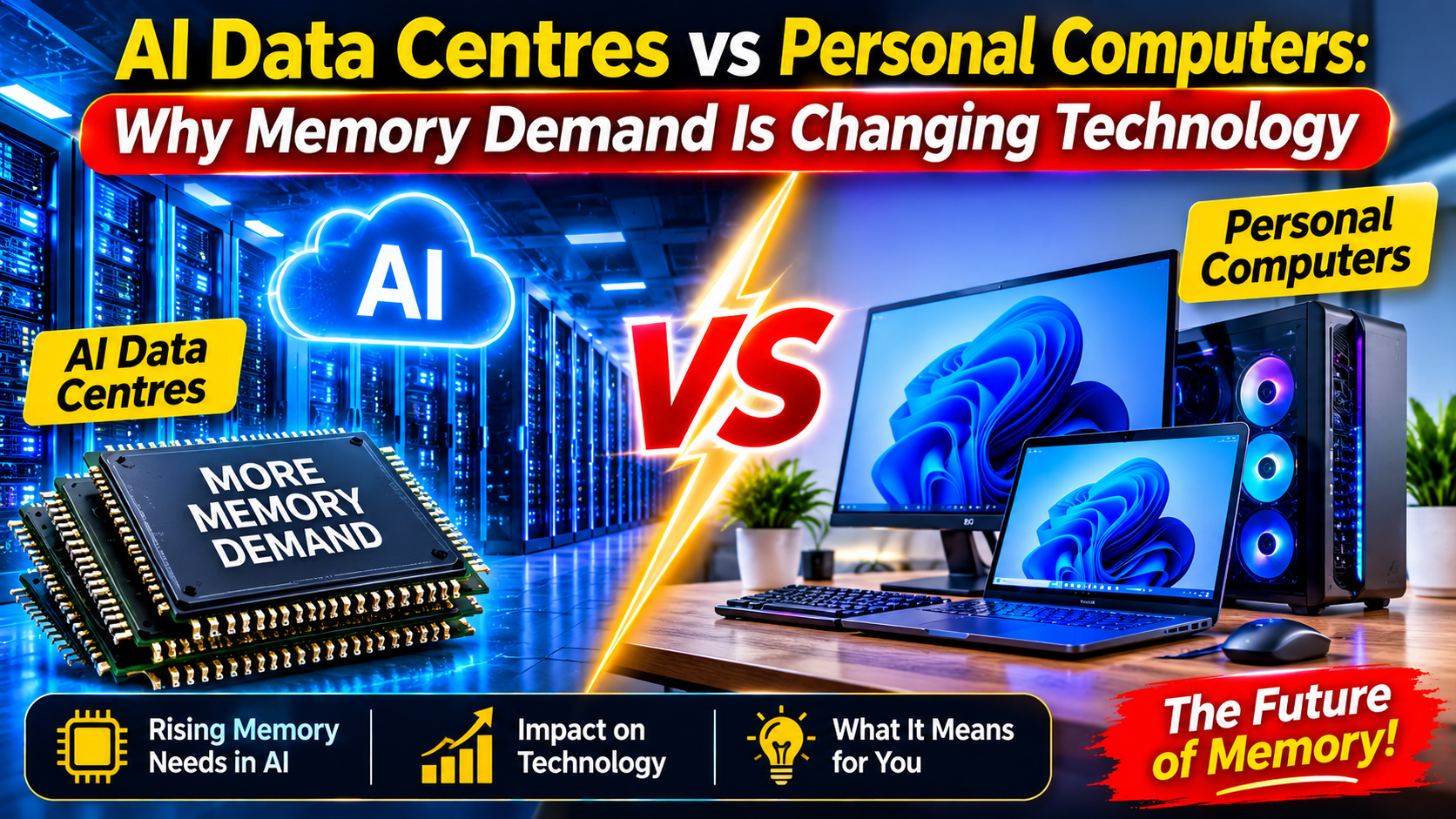
AI Data Centres vs Personal Computers: Why Memory Demand Is Changing Technology
AI Data Centres vs Personal Computers: Why Memory Demand Is Changing Technology
Computer memory is an essential part of almost every modern digital device. Smartphones, laptops, desktop computers, servers and AI systems all depend on memory to process information and run applications.
However, the rapid growth of artificial intelligence is increasing demand for high-performance memory. This is creating new challenges for hardware manufacturers, cloud providers and everyday technology users.
Why Does AI Need So Much Memory?
Modern AI models process enormous amounts of information. They need memory to store model parameters, handle data and support calculations during training and everyday use.
Large AI systems often run on powerful servers containing specialised processors and high-bandwidth memory.
As companies build more AI infrastructure, demand for memory components has increased across the industry.
What Is Happening to Personal Computers?
Personal computers also depend on DRAM, commonly used as system RAM.
When memory supply becomes constrained and demand increases, manufacturers may face higher component costs. Those costs can eventually affect laptop, desktop and smartphone prices.
The impact depends on supply agreements, manufacturing capacity, product demand and how much inventory companies already hold.
Cloud AI vs Local AI
There are two common ways to access AI computing power.
Cloud-Based AI
Cloud AI runs on remote servers managed by technology companies or cloud providers.
Benefits include:
Access to powerful computing resources.
No need to own expensive AI hardware.
Easier access to large models.
Centralised maintenance and updates.
Potential drawbacks include internet dependence, recurring costs and data privacy considerations.
Local AI
Local AI runs directly on a personal computer or another device.
Benefits include:
More control over local data.
Potentially lower latency for supported tasks.
Offline operation with suitable models.
Greater control over model configuration.
However, local AI can require significant RAM, storage and processing power. Performance depends on the hardware and model size.
What Should Consumers Consider?
Before purchasing a computer for AI-related work, users should consider:
How much RAM their applications require.
Whether their processor supports their intended workload.
The available GPU and memory capacity.
Storage requirements for models and datasets.
Whether cloud services could be more practical.
Their budget and future upgrade options.
Will AI Make Personal Computers More Expensive?
Not necessarily in every case. Hardware prices depend on multiple factors, including manufacturing capacity, supply chains, product demand and competition.
However, growing demand from AI data centres can put pressure on memory supply and may contribute to higher component costs.
Final Thoughts
Artificial intelligence is changing the economics of computing. Data centres need more powerful hardware, while consumers still depend on affordable memory for everyday devices.
The future will likely include both cloud-based and local AI systems. Choosing between them will depend on performance, privacy, cost and the type of work users need to complete.
Related reading: AI in India: How Local AI Infrastructure Is Changing the Future of Technology
Advertisement