
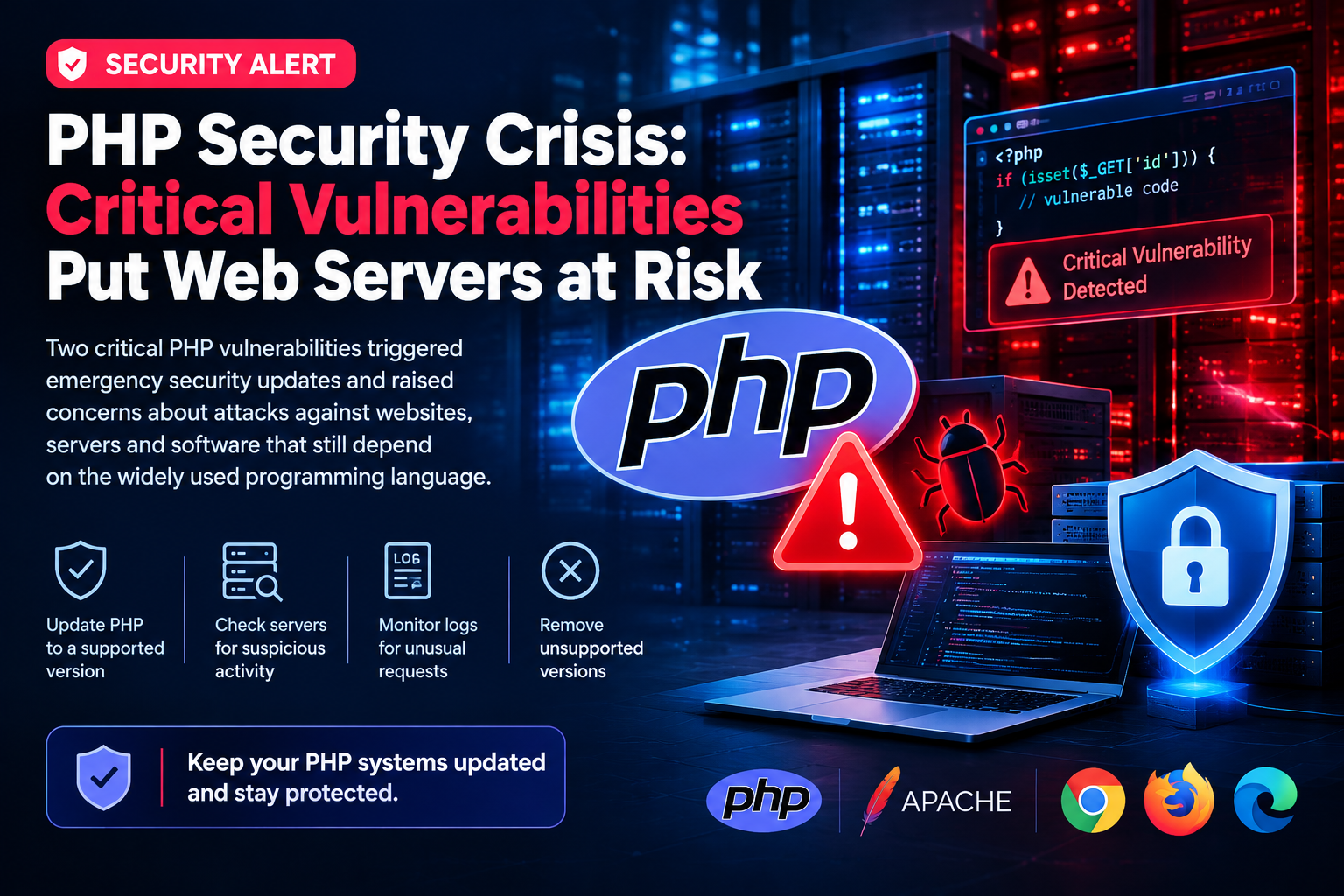
PHP Security Crisis: Critical Vulnerabilities Put Web Servers at Risk
PHP Security Crisis: Critical Vulnerabilities Put Web Servers at Risk
The cybersecurity world recently faced another major warning after two critical vulnerabilities were discovered in PHP, one of the technologies that continues to power a huge number of websites and web applications.
Security researchers and industry experts warned organizations to update affected systems as quickly as possible because the vulnerabilities could have serious consequences for vulnerable installations.
Why PHP Security Matters
PHP has been used for decades and remains an important part of the web ecosystem. It powers websites, content management systems and numerous applications.
The problem is that vulnerabilities in widely deployed software can have a much larger impact because organizations may be running different versions and configurations across thousands of servers.
The PHP security team announced emergency updates after information about the vulnerabilities reportedly leaked before the scheduled disclosure.
Attackers Can Exploit Publicly Known Vulnerabilities Quickly
Once security flaws become public, attackers can move quickly to identify vulnerable systems.
TechCrunch reported that the recent PHP vulnerabilities were serious enough to cause outages at websites and prompted warnings for organizations using affected PHP systems. The incident also highlighted how quickly attackers can attempt to exploit newly disclosed vulnerabilities.
The situation demonstrates an important security lesson: delaying software updates can leave organizations exposed even when official patches are already available.
What Businesses Should Do
Organizations using PHP should:
Update PHP to a supported and patched version.
Review internet-facing servers for suspicious activity.
Monitor security logs for unusual requests.
Remove unsupported PHP versions where possible.
Keep web applications and server components updated.
Restrict unnecessary access to production systems.
The Bigger Cybersecurity Lesson
The PHP incident is another reminder that older technologies can remain critical parts of the modern internet.
Even when newer programming languages and security practices become popular, millions of systems can continue depending on legacy technologies.
For businesses, regular patching and vulnerability monitoring remain among the most important cybersecurity practices.
Advertisement