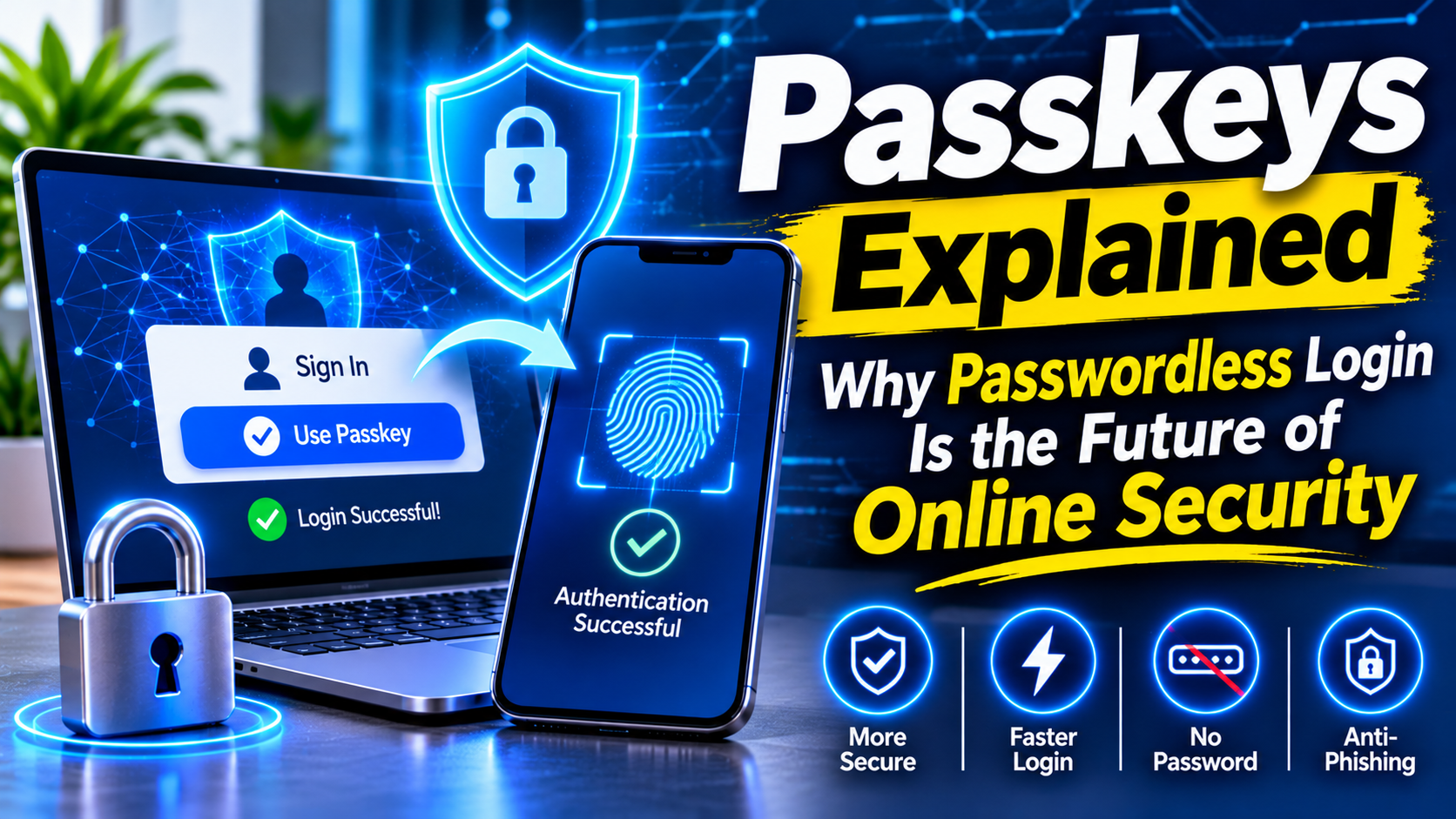
Passkeys Explained: Why Passwordless Login Is the Future of Online Security
Passkeys Explained: Why Passwordless Login Is the Future of Online Security
Passwords have been used for decades to protect online accounts. However, weak passwords, reused credentials and phishing attacks continue to create security problems.
Passkeys offer another way to sign in. They use cryptographic technology and device-based authentication to reduce the need for traditional passwords.
What Are Passkeys?
A passkey is a digital credential that allows a user to authenticate with a supported website or application without entering a traditional password.
Passkeys are based on public-key cryptography. When a passkey is created, a related pair of cryptographic keys is generated.
The private key stays protected on the user's device or within an approved credential manager, while the public key is registered with the service.
How Do Passkeys Work?
The process generally works like this:
A user creates a passkey for a website or application.
The service stores the public key.
The private key remains protected by the user's device or credential manager.
During login, the service sends a challenge.
The device uses the private key to sign the challenge after user verification.
The service verifies the response using the public key.
The user may confirm their identity with a fingerprint, face recognition, device PIN or another supported method.
Why Are Passkeys More Secure?
Passkeys are designed to resist common password-based attacks.
Protection Against Phishing
A passkey is associated with the website or application for which it was created. This helps prevent it from being used on a fake website pretending to be the real service.
No Password to Reuse
Users do not need to create or remember a separate password for every supported account.
Device-Based Verification
Authentication can use a device's built-in security features, making the login experience simpler.
Where Can Users Use Passkeys?
Many major technology platforms and online services support passkeys.
Availability and setup steps differ between websites, operating systems and account providers. Users should check the security settings of each service.
Are Passkeys Completely Risk-Free?
No security method is perfect.
Users should protect their devices, keep account recovery information updated and understand how their credential manager synchronises passkeys.
Losing access to a device can create recovery challenges if no other supported recovery method is configured.
Passkeys vs Traditional Passwords
Traditional passwords rely on a secret that users enter and services verify. Passkeys use cryptographic credentials and a device-based authentication process.
Passkeys can reduce phishing and password reuse risks, but good account recovery practices and device security remain important.
Final Thoughts
Passkeys represent an important step towards simpler and stronger online authentication.
As more services adopt passwordless login, users may gradually rely less on traditional passwords. Understanding how passkeys work can help people make safer choices when protecting their digital accounts.
Related reading: Google, Apple and Mozilla Block Compromised eMudhra Certificates
Advertisement