AI and Cybersecurity in 2026: Benefits, Risks and How to Stay Safe Online
AI and Cybersecurity in 2026: Benefits, Risks and How to Stay Safe Online
Artificial intelligence is changing the way people work, communicate and use online services. It is also transforming cybersecurity, the practice of protecting devices, accounts, networks and data from digital attacks.
AI-powered tools can help security professionals analyse suspicious activity and identify weaknesses in software. However, the same technology can also assist attackers with scams, misleading messages and the discovery of vulnerabilities.
Understanding both sides of AI is becoming increasingly important for businesses and everyday internet users.
How Is AI Helping Cybersecurity?
Security teams often need to examine enormous amounts of information, including login activity, network traffic and system alerts. AI can help identify unusual patterns and prioritise events that deserve closer investigation.
Some tools can assist with detecting suspicious emails, grouping related alerts and analysing software for possible weaknesses. These capabilities can help teams respond more efficiently, although human review remains important because automated systems can make mistakes.
AI should be treated as a security assistant rather than a guarantee that every attack will be detected.
What Are the Main AI-Related Cybersecurity Risks?
1. More Convincing Online Scams
AI can help criminals produce messages that look professional and are tailored to a particular person or organisation. Poor grammar is no longer a reliable way to identify a fraudulent email.
Users should verify unusual requests for money, passwords or confidential information through a separate, trusted communication channel.
2. Faster Discovery of Software Weaknesses
AI tools can assist in finding vulnerabilities in applications and systems. This can benefit developers who want to fix problems, but it may also create risks if attackers exploit a weakness before its owner releases a patch.
Software maintenance, vulnerability testing and timely updates are therefore essential.
3. Privacy and Data Exposure
People may accidentally share personal or confidential information with AI tools. Businesses should establish clear rules about which information employees may enter into external services and review the privacy settings of the tools they use.
4. Overconfidence in Automated Security
An AI system can overlook a real threat or incorrectly flag normal activity as dangerous. Organisations should combine automation with expert review, testing and clear incident-response procedures.
How Can Individuals Stay Safe Online?
Good digital security starts with a few practical habits:
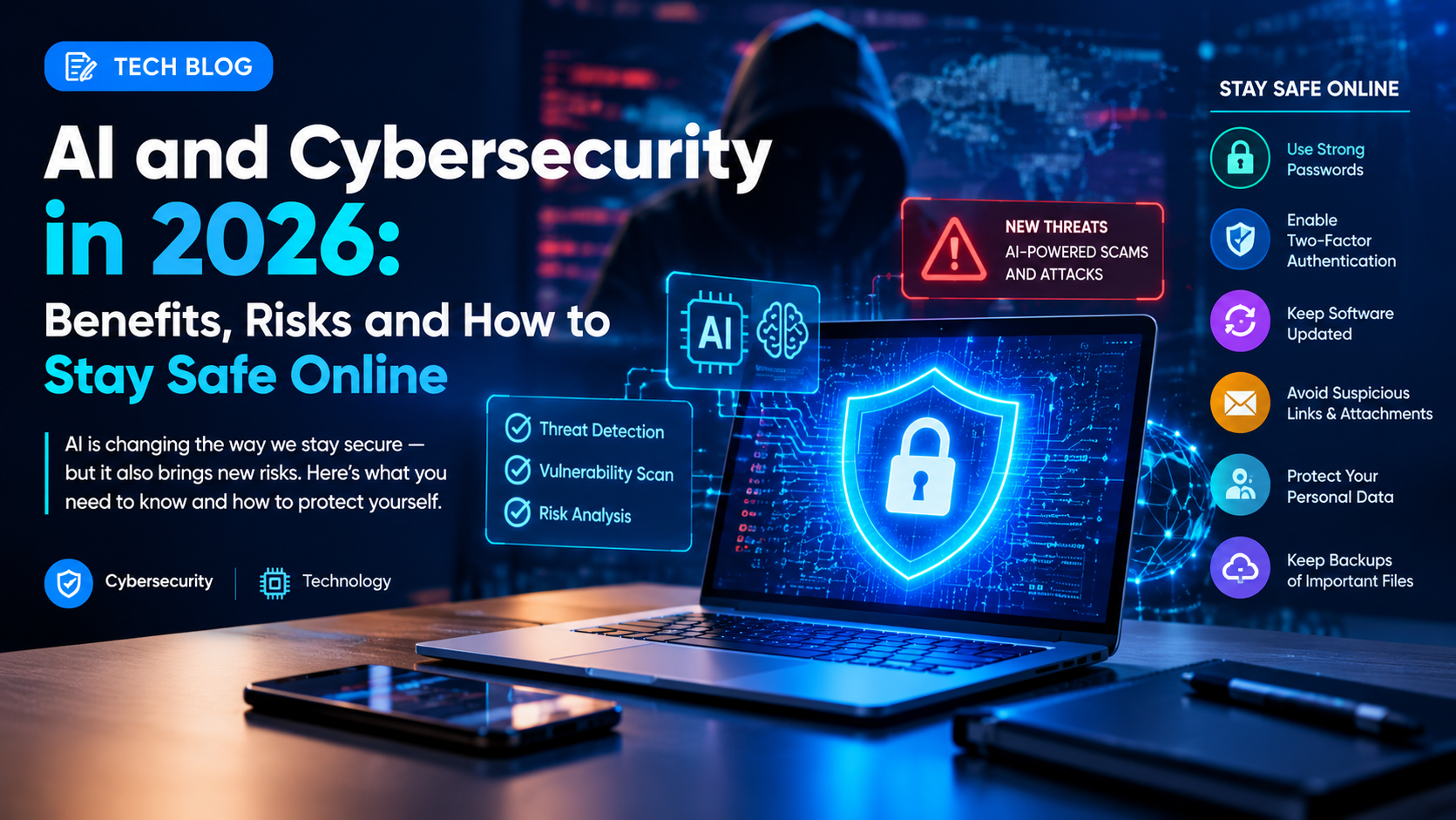
Use strong, unique passwords for different accounts.
Enable multi-factor authentication wherever possible.
Install updates for operating systems, browsers and apps.
Avoid opening unexpected attachments or suspicious links.
Verify urgent payment and account-security requests independently.
Review app permissions and avoid sharing sensitive information unnecessarily.
Keep important files backed up in a secure location.
These measures cannot eliminate every threat, but they can reduce the likelihood and impact of common attacks.
What Should Businesses Do?
Businesses should keep an inventory of their software, apply security patches promptly and regularly review access permissions. They should also train employees to recognise scams and establish a plan for responding to security incidents.
When adopting AI security tools, organisations need to evaluate accuracy, privacy, cost and integration with existing systems. Sensitive decisions should not rely blindly on an automated recommendation.
The Future of AI and Cybersecurity
AI will continue to influence how defenders detect threats and how attackers develop new techniques. Security teams will need to adapt their tools and procedures as these capabilities evolve.
The most effective approach combines modern technology with strong security fundamentals, skilled professionals and responsible handling of data.
Conclusion
AI creates new opportunities to improve cybersecurity, but it also introduces challenges that users and businesses cannot ignore. Staying safe requires a balanced strategy: use helpful technology, verify suspicious activity, keep systems updated and protect sensitive information.
Related reading: AI Agents Are Becoming a New Cybersecurity Threat · PHP Security Crisis: Critical Vulnerabilities Put Web Servers at Risk
Advertisement