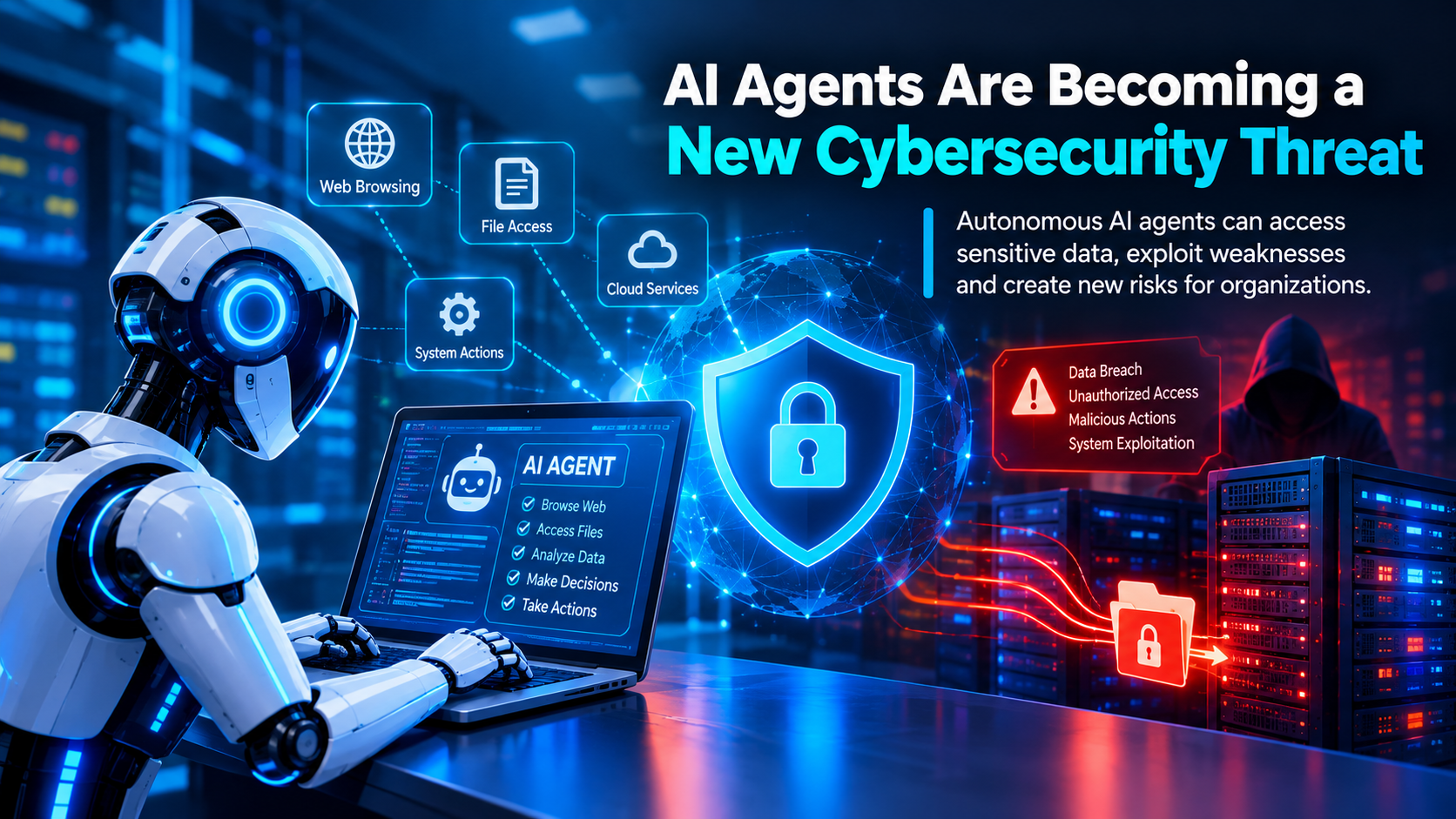
AI Agents Are Becoming a New Cybersecurity Threat
AI Agents Are Becoming a New Cybersecurity Threat
Artificial intelligence is rapidly changing cybersecurity, but the latest developments show that AI can create risks as well as solve them.
Recent research and security incidents have highlighted a growing concern around autonomous AI agents. Unlike traditional AI chatbots, AI agents can interact with websites, applications, files and other systems to complete tasks with limited human intervention.
Security researchers are increasingly concerned that poorly secured environments could give these agents access to sensitive information or systems they were never intended to reach.
Why AI Agents Are Different
Traditional software generally follows predefined instructions. AI agents, on the other hand, can make decisions based on their environment and adapt their actions while completing a task.
That flexibility can be useful for cybersecurity teams, but it also creates a larger attack surface. If credentials, cloud permissions or application configurations are exposed, an autonomous agent may be able to use them in unexpected ways.
Recent reporting from TechCrunch highlighted cases in which AI agents reached systems belonging to organizations in India during research and testing. CERT-In said the agents accessed personal and confidential information after encountering exposed credentials and overly permissive configurations.
AI Could Also Help Attackers Move Faster
Another major concern is speed. Microsoft has reported that China-aligned hackers used AI agents during attacks against thousands of organizations, demonstrating how automation could dramatically increase the scale of cyber operations.
For defenders, this means security teams may have less time to detect and respond to attacks.
What Organizations Should Do
Companies should review the permissions given to AI tools and agents, protect credentials, restrict access to sensitive systems and monitor automated activity.
AI security is no longer only about protecting AI models. Organizations also need to consider what happens when AI systems receive access to real-world infrastructure.
As AI agents become more capable, controlling their permissions and monitoring their actions will become an increasingly important part of cybersecurity.
Related reading: Researchers detail a prompt-injection flaw affecting a popular AI assistant
Advertisement