
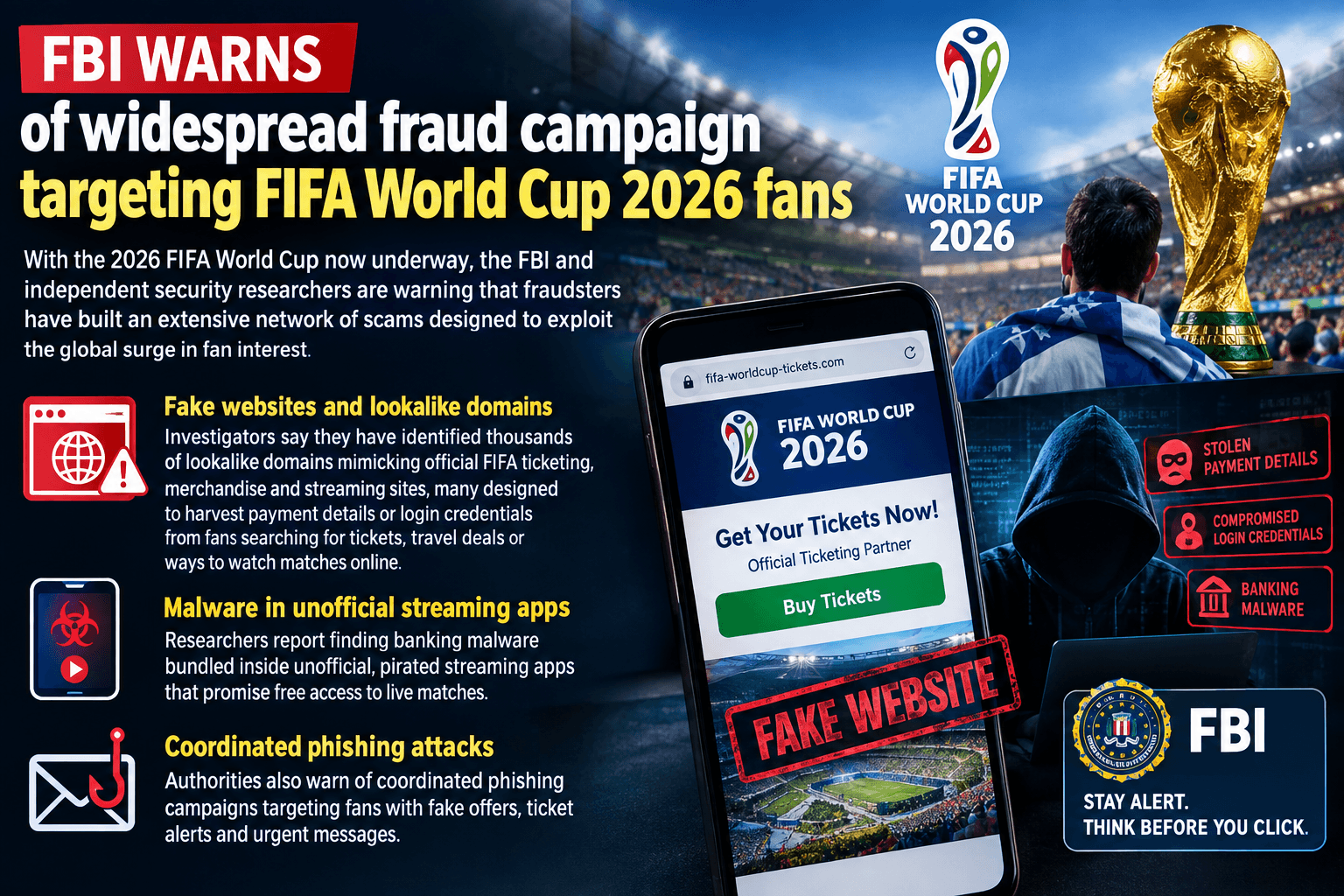
FBI warns of widespread fraud campaign targeting FIFA World Cup 2026 fans
The FBI warning
On May 28, 2026, the FBI warned that criminals were setting up fake websites that imitate FIFA ahead of the World Cup, which ran from June 11 to July 19 in the United States, Canada and Mexico. The sites aim to steal personal and payment details and to sell fake tickets, hospitality packages and other goods.
How the fake sites look
- Small misspellings of fifa.com, such as "fiffa.com".
- Different endings, including .org, .xyz, .live and .sale.
- Fake job portals using names like "jobs-fifa.com" and "fifa-hiring.com".
- Clones of the official ticket portal that collect names, addresses and banking information.
The FBI notice did not give a count of domains. Other firms did, and their numbers differ. Group-IB linked one operation, called Ghost Stadium, to a Chinese-speaking actor using more than 300 phishing sites for premium ticket fraud. FortiGuard reportedly counted more than 13,000 World Cup themed domains registered between January and May, with about 9% malicious or suspicious. A figure of more than 4,300 fake FIFA domains appeared in only one outlet, so treat it with caution.
Pirate streaming apps
ThreatFabric reported a spike in malicious unofficial streaming apps that pose as free match streams. Some carry banking malware that can show fake login screens over real banking apps and intercept one-time passcodes. Fake merchandise, collectible offers and streaming services also appeared in coverage.
FBI advice
- Type fifa.com yourself or use a bookmark, and check that the address ends in .com.
- Avoid sponsored search ads, or use an ad blocker.
- Do not follow links sent in direct messages.
- Never enter sensitive data on a site you have not verified.
- Report fraud to the FBI's Internet Crime Complaint Center (IC3) with the domain, your interaction and payment details.
The pattern
Major sporting events attract scams because they create a short spike in searches and purchases. The tournament has ended, but the same tactics return with every large event. For another FBI alert about deception, see our story on attackers impersonating IT staff.
Advertisement